 By Admin

Have you ever discovered a small, oddly shaped metal object in an old kitchen drawer and wondered what it was supposed to do?
At first glance, it might look like a tiny key, a bent piece of wire, or even part of a broken utensil. But this unusual little object actually served an important purpose in kitchens many decades ago.
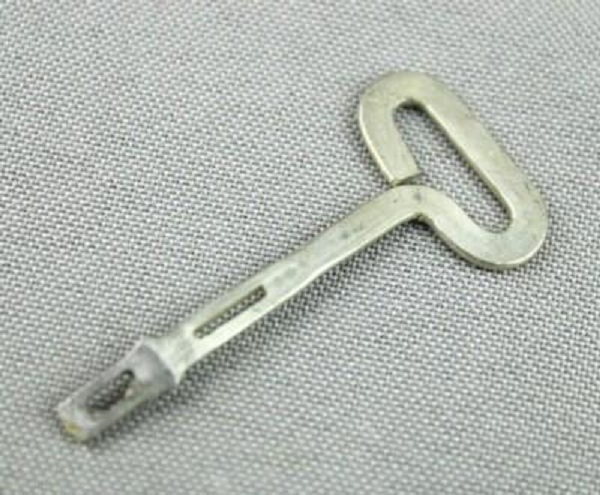
It is known as a vintage can opener key, and it was designed to open a particular type of tin can.
Unlike the can openers most people use today, this tool didn’t have a rotating cutting wheel or a sharp triangular punch. Instead, it worked with a special metal strip attached to the lid of certain cans.
How Did This Old-Fashioned Can Opener Work?
The design was surprisingly simple.
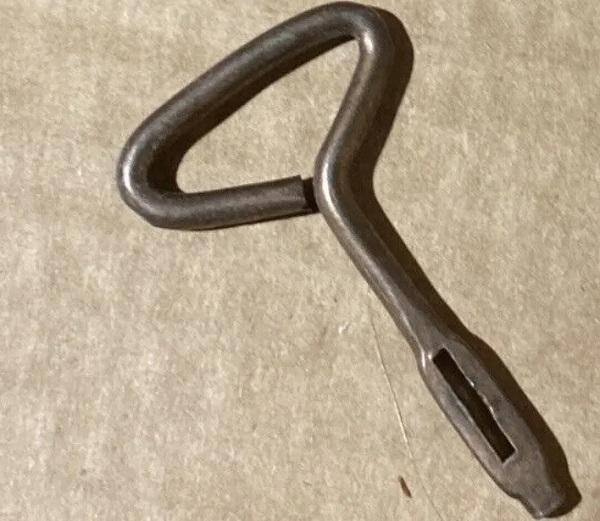
One end of the tool had a small loop that served as a handle. The other end contained a narrow slot.
To use it, you placed the slotted end over the metal tab attached to the can’s lid. Then you turned the handle, gradually winding the metal strip around the shaft.
As the strip rolled up, it pulled the lid away and opened the container.
This method was commonly used with older tins containing products such as sardines, corned beef, and other preserved foods.
It required a little patience, but once you understood the movement, the process was quite straightforward. The winding action allowed the lid to come away gradually rather than requiring you to cut around the entire rim.

Why Was This Tool So Important?
Today, opening a can is usually something we barely think about.
Many containers come with convenient pull rings, while others can be opened with an inexpensive manual or electric opener.
But things were different before these modern conveniences became common.
Opening a tin could be difficult and sometimes dangerous. People occasionally resorted to knives, chisels, or other unsuitable household objects to get inside.
The small winding key offered a much more practical solution for cans designed to work with it.
It was compact, easy to store, and simple to operate once you learned how it worked.
For people who grew up using these tools, the familiar twisting motion can bring back memories of family kitchens and meals prepared long before modern packaging became widespread.
Why Are They So Rare Today?
Packaging has changed considerably over the years.
Many manufacturers gradually moved toward easier opening systems, including pull-tab lids and other designs that no longer required a separate key.
As these newer options became more popular, the old winding key became less common in everyday kitchens.
By the middle of the twentieth century, newer can-opening designs were becoming increasingly widespread, leaving many of these little metal tools forgotten in kitchen drawers.
However, they never disappeared completely. Some specialty tins still use similar opening mechanisms.
Because the keys were small, inexpensive, and easy to misplace, many people kept spare ones in drawers for years. Others eventually forgot what they were used for.
That’s one reason collectors and vintage kitchenware enthusiasts still come across them today.
How Can You Recognize One?
There are a few details that make this object easier to identify.
Look for a small metal tool with:
- A simple loop-shaped handle.
- A narrow, flattened shaft.
- A slot at the end designed to hold a thin metal tab.
- No rotating cutting wheel or triangular punching point.
It is easy to confuse this object with other vintage kitchen tools.
A traditional church-key opener, for example, usually has a pointed section for punching holes in cans and may also include a bottle-cap opener.
A hand-crank can opener is different again because it uses a wheel and gears to cut around the rim.
The old-fashioned winding key has a much simpler design. Its job was to catch the metal strip already attached to a specially designed can and roll it back.
A Small Object With a Big History
It’s fascinating how ordinary household objects can become mysterious as technology changes.
Something that was once used regularly in kitchens can eventually become an unfamiliar curiosity to younger generations.
The next time you find a little metal key with a loop on one end and a narrow slot on the other, take a closer look before throwing it away.
You might be holding a small piece of kitchen history: a vintage can opener key that helped people open their food long before today’s convenient pull-tab lids became commonplace.
Did you recognize this old kitchen tool? Have you ever used one, or do you remember seeing one in your parents’ or grandparents’ kitchen? Share your memories in the comments!
DISCLAIMER: This article is a rewritten and paraphrased version of information from the linked source. It is intended for general information and entertainment. Historical details have not been independently verified, and the article is not a comprehensive instruction manual for opening cans.