 By Admin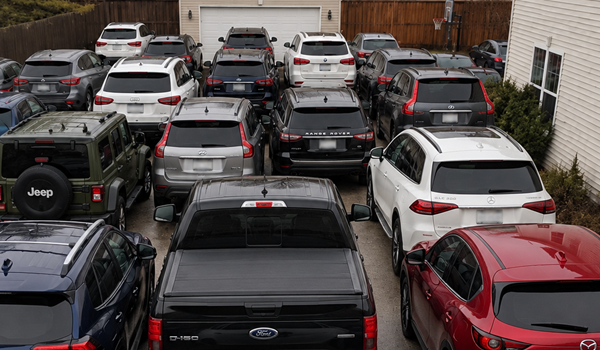
For six months, my neighbor Linda treated my driveway as if it were an extension of her own property.
She parked there whenever she pleased.
At first, it was supposedly for ten minutes.
Then ten minutes became an hour. An hour became an afternoon. Eventually, I would wake up in the morning, pull back my curtains, and see her enormous black SUV sitting in the exact spot where my late husband Robert’s Pontiac had once been.
And every time I asked her to stop, she had the same answer.
“You barely use it anyway.”
She was right about one thing.
I barely did.
But she had no idea why.
Two years earlier, my husband had died suddenly of a heart attack in the garage. He had been working on his beloved Pontiac when it happened.
Robert loved classic cars.
Not casually. Not the way someone might admire a beautiful Mustang passing on the road.
He loved them with the intensity other people reserved for music, sports, or religion.
For more than twenty years, he had belonged to a local classic-car club. Our driveway had practically become an unofficial meeting place. On Saturday mornings, cars would line up along the drive, hoods would be lifted, coffee would go cold on fenders, and Robert would spend hours explaining engines to anyone willing to listen.
Every September, we hosted breakfast for the club.
The driveway would be packed.
The gravel lane behind the house would be filled with cars.
Robert would be outside before sunrise, directing everyone around as if he were running an airport.
“Move that Chevy another foot!”
I would shout from the porch, “Robert, nobody can hear you!”
“That’s why I’m yelling!”
Those mornings had been some of the happiest of my life.
I just didn’t know it at the time.
After Robert died, everything stopped.
I stopped hosting the breakfasts.
I stopped attending club events.
Eventually, I stopped answering the phone when the club members called.
Seeing all those beautiful cars without Robert standing among them hurt too much.
I sold his Pontiac six months after his death.
When it finally rolled away down the driveway, I stood there and cried.
After that, the driveway became quiet.
The gravel lane developed weeds.
The house became quieter.
And Linda noticed.
The first time she parked in my driveway, I let it go.
I was still deep in grief. A neighbor borrowing a little space hardly seemed important.
But then she did it again.
And again.
And again.
“Linda, could you please use your own driveway?”
“I’m only going across the street for a minute.”
“This is still my driveway.”
She would move the SUV, sighing as if I were the one creating a problem.
Eventually, her parking became routine.
I asked politely.
Then firmly.
Then I bought a large metal sign that said:
PRIVATE DRIVEWAY
I put it at the entrance where nobody could possibly miss it.
Linda laughed when she saw it.
“You barely use the thing anyway.”
The next weekend, she parked directly underneath it.
That was when I realized this wasn’t forgetfulness.
She knew.
She simply didn’t care.
Then one morning, everything changed.
I had an appointment with a specialist at 7:30.
I’d waited almost two months for it.
At 6:50, I walked outside with my purse in my hand and found Linda’s SUV blocking my car completely.
I knocked on her door.
Nothing.
I rang the bell.
Nothing.
I called her phone.
Straight to voicemail.
I knocked again.
“Linda! I need you to move your car!”
Nothing.
Fifteen minutes passed.
I could see my own car sitting helplessly in the garage.
At 7:10, I finally called the doctor’s office.
They told me that if I arrived more than fifteen minutes late, they couldn’t guarantee the doctor could see me.
I missed the appointment.
The next available opening was three weeks later.
Three more weeks of waiting and worrying because my neighbor had decided that her convenience mattered more than mine.
That afternoon, Linda finally came outside.
“I’ve been trying to reach you all morning,” I said.
“Oh,” she replied casually. “I was sleeping.”
“You blocked me in.”
“Sorry.”
“I missed a medical appointment I’d waited two months for.”
She shrugged.
“Well, couldn’t someone have driven you?”
I stared at her.
Then she smiled.
“You really should have told me you needed the driveway this morning.”
I couldn’t believe it.
“I have to warn you when I need my own driveway?”
She shrugged again.
“You barely use it anyway.”
Something inside me finally snapped.
Not loudly.
Not dramatically.
It simply stopped bending.
That evening, I sat at the kitchen table and thought about the driveway.
Then I thought about Robert.
And suddenly, I knew exactly what I was going to do.
I opened the hall drawer I hadn’t touched in months.
Inside were Robert’s reading glasses, an old car-show ticket, a tire-pressure gauge, and the club directory he had maintained by hand.
I picked up the phone and called George, the club president.
He answered after a few rings.
“Carol?”
“Hi, George. I have a strange question.”
“Those are usually the best kind.”
I looked out at the empty driveway.
“Is the offer to host the club breakfast still open?”
There was silence.
Then George said, “Are you serious?”
“For the first time in two years,” I told him, “I think I am.”
“When?”
“Monday.”
“What time?”
“Seven.”
He laughed.
“Carol, whatever you’re planning, Robert would have loved it.”
I smiled.
“George?”
“Yeah?”
“Bring everyone.”
“The whole club?”
“The whole club.”
And he did.
Monday morning, at 6:45, Linda pulled her SUV into my driveway again.
As usual, she didn’t ask.
She simply parked in the middle of it and walked back toward her house.
This time, I smiled.
At exactly seven, the first classic car arrived.
A red 1967 Mustang.
Then came a Corvette.
Then a Camaro.
Then vintage pickups.
Then a powder-blue Cadillac.
Car after car rolled into the driveway.
I directed every one of them into position.
By 7:30, there were eighteen vehicles.
By eight, there were thirty.
Thirty cars filled my driveway and stretched down the gravel lane.
The club members brought coffee, pastries, eggs, bacon, chairs, and enough food to feed a small army.
For the first time in two years, my house sounded alive again.
Then Linda came outside.
She was wearing a robe and slippers.
She stared at the cars.
“What the hell is this?”
I stepped onto the porch holding my coffee.
“Morning.”
“Move these cars!”
“I can’t.”
“What do you mean, you can’t?”
“People are eating.”
“I have work!”
I took another sip.
“You barely use your car anyway.”
Her face turned red.
“You did this on purpose!”
“I invited some friends for breakfast.”
“Thirty friends?”
“Robert was popular.”
She stared at me.
Then she pointed at her SUV.
“I’m blocked in!”
“Yes,” I said.
“You need to move them!”
“Eventually.”
“I need to leave now!”
“That’s unfortunate.”
For the first time, Linda understood exactly what it felt like to have someone else’s plans treated as though they didn’t matter.
And honestly?
I enjoyed it.
Then the last car arrived.
The powder-blue Cadillac.
The driver’s door opened, and an elderly man slowly stepped out, leaning on a polished wooden cane.
Linda froze.
Her coffee slipped from her hand.
“Arthur?”
Arthur was eighty-two.
He had lived in the neighborhood longer than either of us. His family had once owned much of the land surrounding our houses. He knew every property line in the area because, decades earlier, he had helped establish many of them.
He also knew Robert well.
Arthur looked at Linda.
Then at her SUV.
Then at my driveway.
“Linda,” he said, “don’t tell me that’s your vehicle sitting in Carol’s driveway.”
“It’s complicated.”
Arthur looked at the thirty cars surrounding her SUV.
“No, it doesn’t look complicated to me.”
Linda folded her arms.
“My driveway is being landscaped.”
“You’ve got a perfectly good driveway.”
“Carol doesn’t need all this space.”
Arthur’s expression hardened.
“I showed you the property line myself when you bought that house.”
Linda went silent.
Arthur continued.
“You asked me about overflow parking. I told you this driveway and the gravel lane belonged to Carol and Robert. I even walked you to the property line.”
I looked at Linda.
“You knew?”
She wouldn’t look at me.
Finally, she said:
“I know whose driveway it is.”
That was all I needed to hear.
For six months, I’d wondered whether she’d genuinely misunderstood.
She hadn’t.
She knew.
She simply believed my property didn’t matter because I wasn’t using it the way she thought I should.
Arthur shook his head.
“Then why are we even discussing this?”
Linda pointed at the cars.
“Because she blocked me in!”
Arthur looked at her SUV.
Then at the thirty cars.
Then back at Linda.
“Seems to me,” he said, “you blocked yourself in.”
I nearly laughed into my coffee.
Linda threatened to call the police.
“Go ahead,” I told her.
So she did.
While she waited, breakfast continued.
And something unexpected happened.
I laughed.
Really laughed.
George was cooking eggs on the patio while three different men argued about how he was doing it wrong.
Someone shouted that the grill was too hot.
Someone else insisted the heat was fine.
George yelled at both of them.
And I laughed so hard my eyes filled with tears.
George looked at me.
“There she is.”
“Who?”
“That laugh.”
He smiled.
“We’ve missed that, Carol.”
Later, a woman named Diane handed me a cup of coffee.
“Robert’s coffee,” she said.
Black.
One sugar.
Exactly how he liked it.
I looked at the cup and started crying.
Diane smiled.
“We haven’t forgotten him.”
Then she reached into her bag and handed me a photograph.
It had been taken years earlier, right there in my driveway.
Robert stood beside his Pontiac, arms raised, shouting directions while classic cars filled the background.
He looked completely alive.
I could almost hear his voice.
Arthur came over and looked at the photograph.
“Robert would be happy,” he said.
I looked around.
The cars.
The coffee.
The laughter.
The people.
For the first time in two years, my driveway didn’t look like an empty piece of property.
It looked like home.
Around nine, the police arrived.
Linda immediately rushed outside.
The officer listened to her complaint, then walked over to me.
“Are you the property owner?”
“Yes.”
“Did you give her permission to park there?”
“No.”
“Have you asked her not to park there before?”
“Repeatedly. For six months.”
He looked at the PRIVATE DRIVEWAY sign.
Then at Linda.
“Ma’am, is your vehicle parked on your property?”
Linda hesitated.
“No.”
“Did the property owner give you permission?”
“No.”
The officer nodded.
“Then you parked on private property after being told not to. These cars belong to the property owner’s guests.”
Linda protested.
“But I’m blocked in!”
The officer looked at her calmly.
“That appears to be the result of where you chose to park.”
That was enough.
I told George to start moving the cars after breakfast.
Within ten minutes, Linda had a clear path out.
Before she left, the officer spoke privately with her.
I didn’t hear everything.
I didn’t need to.
Linda drove away without looking at me.
The breakfast continued until almost noon.
People told me stories about Robert I’d never heard.
They played horseshoes.
They drank coffee.
They laughed.
And when the final car finally disappeared down the road, I stood alone in my driveway.
For the first time in two years, it didn’t look empty.
It looked like mine.
Three days later, Linda knocked on my door.
“You made me look like an idiot,” she said.
“I didn’t park your car in my driveway.”
“You invited thirty people knowing I was there.”
“Yes.”
“That was childish.”
“Maybe.”
She stared at me.
“You could have just asked me to move.”
I looked at her.
“I did.”
She didn’t respond.
“For six months,” I continued. “I asked politely. Then firmly. Then I put up a sign. You parked underneath the sign.”
“I didn’t think it was that serious.”
“I missed a medical appointment because of you.”
She looked away.
“You told me I should have warned you that I might need my own driveway.”
Her expression changed slightly.
“I apologized.”
“That wasn’t an apology.”
Silence.
Then she finally asked:
“You really needed all those cars?”
“No.”
“Then why?”
I thought about Robert.
“Because apparently one sign and six months of asking weren’t enough.”
She sighed.
Then I asked the question that had been bothering me since Arthur’s arrival.
“You knew the driveway was mine from the beginning, didn’t you?”
She looked down.
“Yes.”
“Then why did you keep doing it?”
She took a breath.
“Because you weren’t using it. It just seemed like such a waste.”
I shook my head.
“You don’t get to decide that something belongs to you because someone else isn’t using it.”
She nodded slowly.
“I understand now.”
It wasn’t a perfect apology.
It wasn’t even really an apology.
But it was enough.
Linda never parked in my driveway again.
Not once.
Months later, I hosted another breakfast.
This time only fourteen cars came.
There was no point to prove.
No revenge.
Just friends.
As the cars arrived, Linda stepped outside her house.
She watched them.
Then she got into her SUV and moved it farther up her own driveway, leaving plenty of room for Arthur’s Cadillac.
Arthur noticed.
Of course he did.
He raised one eyebrow.
“Progress?”
“Don’t jinx it,” I told him.
He laughed.
Then he looked at my driveway, now filled again with old cars and old friends.
“Well,” he said, “looks like you’re using it after all.”
I smiled.
“Turns out I am.”
But that wasn’t quite the truth.
The truth was that I’d been using it all along.
Even during those two silent years, when it sat empty and weeds grew through the gravel, that driveway had never really been empty.
It had been holding memories.
It had been holding Robert.
Every time I looked at it, I saw the life we’d shared.
The Saturday mornings.
The coffee.
The laughter.
The Pontiac.
The man I loved standing in the middle of everything, waving his arms and shouting directions nobody could hear.
I had mistaken the empty driveway for abandonment.
It wasn’t abandonment.
It was grief.
I thought the thirty cars were going to teach Linda a lesson about boundaries.
Maybe they did.
But they taught me something much more important.
I had spent two years keeping part of my life closed because Robert was no longer there to share it with me.
Somewhere along the way, I’d convinced myself that reopening that part of my life would mean leaving him behind.
I was wrong.
That Monday morning, thirty cars filled my driveway again.
There was coffee.
There was laughter.
There was the smell of bacon and gasoline.
And for the first time since Robert died, I stood in the middle of that beautiful noise without thinking only about what I had lost.
I thought about what was still here.
The friends who remembered him.
The memories that hadn’t disappeared.
The laughter I had forgotten I still had.
And I finally understood something:
Sometimes an empty space isn’t empty at all.
Sometimes it’s simply waiting for you to be ready to fill it again.
And sometimes, the thing that finally pushes you back into your own life is the very thing you never expected.
For me, it took a rude neighbor, one ridiculous SUV, and thirty classic cars.