 By Admin
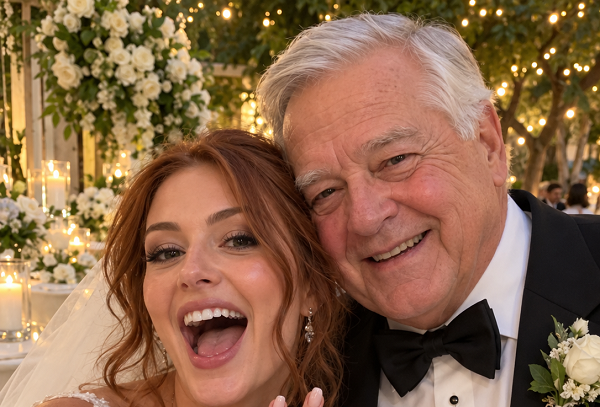
Everyone believed I had married Richard for his money.
And if I’m being honest, they weren’t completely wrong.
I was thirty-two, drowning in debt, and just one missed paycheck away from losing my apartment. Richard was seventy-three, wealthy, widowed, and lonely in a way that money couldn’t fix. He lived in a magnificent house filled with marble floors, expensive watches, and beautiful furniture, yet there was an emptiness in his life that no amount of wealth could hide.
We met at a charity dinner where I was working as a server, carrying trays of champagne between tables.
Richard asked me my name.
Then he looked at me and said something I never expected.
“Have you been standing all evening? Your feet must be hurting.”
It was such a simple question, but I couldn’t remember the last time a man had cared enough to ask whether I was tired.
Three months later, Richard proposed.
My friends thought I had lost my mind. His children were even less welcoming.
“Do you honestly think you’re going to keep this house?” his daughter Rebecca whispered after the wedding. “You won’t get anything from him.”
Richard had heard every word.
He simply smiled and replied, “She’ll receive exactly what she deserves.”
I pretended her cruelty didn’t bother me. For a while, I even told myself that I didn’t care what anyone thought about my marriage.
The truth was that I loved the security Richard gave me.
I loved waking up without worrying about whether the electricity bill had been paid. I loved shopping for groceries without calculating every dollar in my account. I loved the warm house, the peaceful mornings, and the unfamiliar feeling of knowing that one bad week wouldn’t destroy my entire life.
But Richard gave me more than financial comfort.
He was gentle with me. He remembered how I liked my coffee, noticed when I was exhausted, and listened when I talked about my worries. He never made me feel foolish for asking questions or embarrassed about my difficult past.
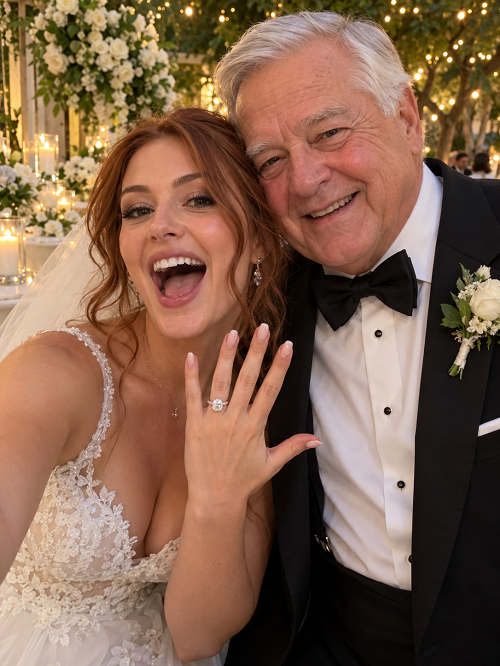
Slowly, I began to care about him in a way I had never planned.
And before I fully understood what had happened, I had fallen in love with him.
Then Richard became ill.
Everything happened much faster than either of us had expected.
Six weeks after his diagnosis, I stood at his funeral, watching the man who had changed my life being laid to rest.
His three children stood across from me with cold expressions, as though I had personally taken their father away from them.
Rebecca barely looked in my direction.
But I cried anyway.
Not because I was afraid of losing the house.
Not because I was worried about the money.
I cried because the man who had made me feel safe for the first time in years was gone, and I would never hear his voice or see his familiar smile again.
A few days after the funeral, Richard’s lawyer asked me to visit his office.
When I arrived, all three of Richard’s children were already sitting inside.
Nobody greeted me.
Nobody offered me a seat.
On the lawyer’s desk rested a small wooden box.
There was no thick stack of legal documents, no obvious will, and no envelope bearing my name.
Only the box.
Rebecca leaned back in her chair, wearing a faint smile that made me feel as though she already knew how everything would end.
The lawyer turned toward me.
“Richard left very specific instructions.”
The room fell silent.
He slowly pushed the wooden box across the desk.
Then he said, “He made sure you received exactly what you deserved.”
Rebecca let out a quiet laugh.
My hands trembled as I reached for the lid. For the first time since Richard’s death, I wondered whether he had discovered something about me that I had never confessed to him.
Had he known that money was part of the reason I had accepted his proposal?
And what had he decided I truly deserved?
The Box Contained Something I Never Expected
I lifted the lid with shaking fingers.
There was no jewelry inside.
No cash.
No deed to the mansion.
Instead, I found a folded letter, an old photograph of Richard and me together, and a small brass key.
Rebecca smirked.
“I told you,” she muttered. “You really thought he was going to leave you something valuable?”
I ignored her and unfolded the letter.
Richard’s handwriting was immediately recognizable.
The first line read:
Anna, I knew why you married me.
I stopped breathing for a moment.
He had known.
All those months when I had wondered whether he suspected my financial struggles, he had understood far more than I had imagined.
I continued reading.
I knew that security was part of the reason you accepted my proposal. I was seventy-three years old, Anna. I wasn’t a fool, and I never pretended that the difference between our lives didn’t matter.
My eyes filled with tears.
I had expected anger, disappointment, or perhaps a final reminder that I had never truly belonged in his world.
Instead, the letter continued.
But there was something I wanted to know. What would you do once you no longer needed me? Would you leave when your debts were paid and your life became comfortable? Or would you stay because the man beside you had become more important than the money he could provide?
I pressed the letter against my chest.
During Richard’s final weeks, he had offered to transfer a substantial amount of money into my name.
I had refused.
I told him that his children would assume I was simply waiting for him to die. I didn’t want our remaining time together to be overshadowed by arguments about his fortune.
I had never known that he remembered that conversation so clearly.
Then I reached the final paragraphs.
My children will inherit my companies, my investments, and the house where they grew up. That is what I have decided, and I hope they use their inheritance wisely.
I looked up at Rebecca.
She appeared satisfied, almost triumphant.
But I returned to the letter.
You, Anna, have already received something I can never put into a will. You helped me feel alive again. You brought laughter into a house that had been silent for years. You sat beside me on the nights when I was afraid, and you never made me feel like a burden when I needed you most.
Tears blurred the words.
Perhaps you married me partly because you needed a better life. I understand that. But I came to love the woman who stayed beside me even when money was not the answer to everything.
I could barely continue reading.
Then I reached the last line on the page.
The key in this box belongs to something I bought long before I became ill. Go there, open the door, and remember that you do not need to spend the rest of your life proving your love to people who have already decided not to believe in it.
I stared at the small brass key in my palm.
There was no address in the letter.
Only a handwritten number on the key’s little metal tag.
17.
The lawyer finally spoke.
“Richard asked me to give you a second envelope if you opened the letter and read it to the end.”
He reached into his desk drawer and placed a cream-colored envelope beside the photograph.
My fingers trembled as I opened it.
Inside was a simple address in a quiet neighborhood on the other side of town.
Beneath it, Richard had written:
Your new beginning is waiting for you.
Rebecca’s smile disappeared.
“What does that mean?” she demanded.
The lawyer remained calm.
“It means exactly what your father intended it to mean. Anna is entitled to visit the property identified in his instructions.”
Rebecca turned toward her brothers, clearly expecting them to object.
But neither said a word.
I carefully placed the letter, photograph, and key back inside the box.
For the first time since entering that office, I felt no need to defend myself.
I had come expecting humiliation. I had expected Richard’s children to watch me walk away with nothing, convinced that their father had finally exposed me as an opportunist.
Instead, I left with something I couldn’t yet understand.
And I knew I had to find out what Richard had left behind.
The Secret Behind the Brass Key
The following morning, I drove to the address written on the envelope.
It led me to a small, peaceful street lined with trees and modest homes. There were no marble floors, towering gates, or expensive cars parked outside.
At the end of the street stood a charming little cottage with pale blue shutters and a white wooden fence.
A brass number 17 hung beside the front door.
My heart began beating faster.
I slipped the key into the lock.
It turned easily.
When I opened the door, I stepped into a bright living room filled with sunlight. There was a comfortable sofa, a small dining table, shelves of books, and a vase of fresh flowers near the window.
The house was modest, but it felt warm and welcoming.
On the kitchen counter sat another envelope.
My name was written across the front.
I opened it and discovered a letter from Richard’s lawyer confirming that the cottage had been legally transferred to me according to Richard’s instructions.
The property was fully paid for.
There was no mortgage waiting for me, no debt to settle, and no hidden obligation that would force me to sell it.
Richard had made sure I would have a safe place to live, independent of his children’s inheritance and free from the uncertainty that had haunted my younger years.
But there was one more page.
It was a handwritten note from Richard.
My darling Anna,
I know you may wonder why I chose a little cottage instead of leaving you a fortune. The answer is simple: I wanted you to have a home that was yours, not a prize that would make you fight with my children.
I cannot promise that everyone will understand our marriage. I cannot make Rebecca approve of you, and I cannot change the past. But I can give you the freedom to build a future without fear.
You once told me that your greatest wish was to sleep peacefully without worrying about what tomorrow might bring. I listened. I hope this little house gives you that peace.
Do not spend your life wondering whether you deserved to be loved. You made my final years happier than you will ever know.
Live well. Laugh often. Help someone whenever you can. And when you think of me, please remember the good days.
With all my love,
Richard.
I sat down on the sofa and cried.
For weeks, I had been preparing myself for the possibility that Richard’s children would leave me with nothing. I had imagined returning to a tiny apartment, searching for another job, and wondering how I would manage without the man I had loved.
But Richard had thought about my future even when he could no longer be part of it.
He hadn’t left me a fortune.
He had left me something I had needed long before I met him: a home, stability, and the chance to start again.
A New Beginning I Never Saw Coming
In the months that followed, I slowly made the cottage my own.
I planted roses beside the fence because Richard had once told me that he loved the way they smelled after the rain. I filled the kitchen with the coffee he used to enjoy and placed our photograph on the mantelpiece.
Every morning, sunlight streamed through the windows, and I found myself thinking about the quiet life we had shared.
I missed Richard terribly.
There were days when I wanted to call him just to tell him something funny that had happened at the grocery store. Sometimes, I caught myself turning toward the empty chair beside me, expecting to hear his opinion about a book or a movie.
Grief didn’t disappear simply because I had a comfortable home.
But little by little, I learned that happiness could return in small ways.
I began volunteering at the same charity organization where Richard and I had first met. I helped serve meals, organized donations, and spent time talking with people who were struggling financially.
I recognized the worry in their faces because I had worn that same expression myself.
Whenever I could, I helped someone pay for groceries or find a temporary place to stay.
I never told them about Richard’s money or the cottage.
I simply remembered what it felt like when someone noticed that I was tired and asked whether I was all right.
One afternoon, several months after the funeral, Rebecca appeared at my door.
She looked different from the confident woman who had laughed at me in the lawyer’s office. She seemed tired and uncertain.
For a moment, neither of us spoke.
Then she glanced past me into the living room.
“Dad really left this place to you?”
“Yes,” I answered quietly.
She looked down at her hands.
“I thought you only wanted his money.”
I took a slow breath.
“Money was part of why I accepted his proposal. I won’t pretend otherwise. But I loved your father, Rebecca. I loved him when he was frightened, when he was ill, and when there was nothing I could do to make things better.”
Her eyes filled with tears.
“He never talked to us about being lonely,” she whispered.
“I think he didn’t want you to worry about him.”
She sat at the kitchen table, and for the first time, we spoke honestly about Richard—not his fortune, not his will, and not what anyone had inherited, but the man we had both lost.
Before she left, Rebecca stood beside the door.
“I’m sorry I treated you that way.”
I could have reminded her of every cruel thing she had said. I could have demanded an explanation for the way she had humiliated me after the wedding.
Instead, I looked at her and said, “Your father wouldn’t want us to spend the rest of our lives hurting each other.”
She nodded, wiping her eyes.
It wasn’t an instant reconciliation. There were still difficult conversations ahead, and forgiveness took time. But that afternoon marked the beginning of something better.
And I realized that Richard’s final gift had reached further than the walls of the cottage.
He had given me the chance to choose kindness instead of bitterness.
What Richard Really Left Me
One year after Richard’s death, I stood in the garden beside the roses I had planted.
The cottage was filled with flowers, and the kitchen smelled of freshly brewed coffee.
I held our old photograph in my hands.
For a long time, I had believed that marrying Richard for financial security was the most important decision I had ever made. I had thought the story of our marriage would always be defined by the difference in our ages, his fortune, and the doubts of the people around us.
But that wasn’t the whole story.
Yes, I had wanted a better life.
Yes, I had been afraid of poverty.
And yes, I had accepted his proposal knowing that his wealth could change my circumstances.
But love had grown between us in the quiet moments that money couldn’t buy: the conversations over breakfast, the evenings spent reading together, the gentle way he held my hand when he was afraid.
Richard had understood my imperfect reasons for marrying him.
He had also seen the person I was becoming.
His children inherited his businesses, investments, and family home. I received a small cottage, a handwritten letter, and the opportunity to begin again.
Yet the older I grew, the more I understood that the cottage was never simply a piece of property.
It was Richard’s way of telling me that my future didn’t have to be defined by my past.
I no longer woke up afraid of unpaid bills. I no longer felt that one difficult month could take everything away from me. And I no longer needed to prove to anyone that my marriage had been real.
I had loved Richard.
He had loved me.
And in the end, that truth was enough.
Sometimes, when I sit in the garden and watch the sunlight fall across the roses, I remember his words from the letter:
Do not spend your life wondering whether you deserved to be loved.
I finally understand what he meant.
We don’t have to be perfect to deserve kindness. We don’t have to have made every decision for the right reasons to become better people. And we don’t have to let other people’s judgments determine what our lives will become.
Richard didn’t leave me the fortune everyone expected.
He left me a place to call home, the courage to forgive, and the freedom to build a life that was truly my own.
And that was worth far more than money.
Because in the end, the greatest inheritance isn’t always wealth. Sometimes, it’s the peace of knowing that someone saw your flaws, understood your fears, loved you anyway, and gave you the courage to begin again.