 By Admin
Few songs have captured jealousy, heartbreak, and vulnerability quite like Dolly Parton’s “Jolene.” But the story behind this unforgettable country classic is even more fascinating than many listeners realize.
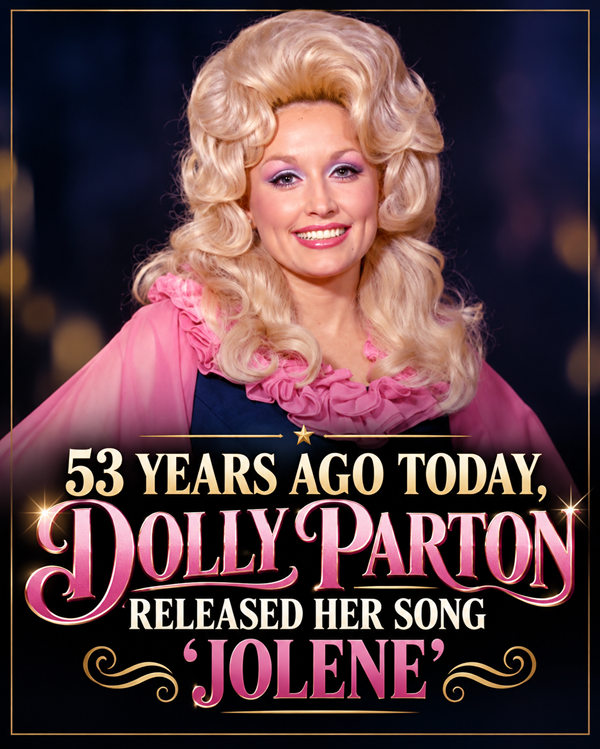
Released as a single on October 15, 1973, “Jolene” became one of the defining songs of Dolly Parton’s remarkable career. With its haunting melody, unforgettable chorus, and emotionally charged story, the song has continued to captivate audiences for more than five decades.
But what inspired Dolly to write a song about a woman pleading with another woman not to take the man she loves?
The answer involves a chance encounter, a personal experience, and the songwriting talent that made Parton a country music legend.
A Chance Encounter That Inspired a Legendary Name
One of the most surprising details about “Jolene” is where its name came from.
According to stories Parton has shared about the song’s origins, she once met a young red-haired girl who approached her for an autograph. The girl introduced herself as Jolene, and Parton was immediately struck by the beauty of her name.
She later recalled telling the girl that if she ever wrote a song called “Jolene,” the girl would know it was about her.
That simple encounter gave Parton a memorable name around which she could build a song.
Yet the name alone was not enough to create the emotional story that would eventually become a worldwide favorite.
For that, she drew inspiration from something much closer to home.
The Personal Experience Behind the Song
Parton has explained that the song was also inspired by a real-life situation involving her husband, Carl Dean.
During their marriage, Parton noticed that Dean was paying attention to an attractive woman who worked at a bank. Although the situation was not necessarily the dramatic romantic rivalry portrayed in the song, it gave Parton an idea that she transformed into a compelling musical story.
Rather than simply writing about jealousy, Parton imagined a woman confronting someone she feared could take away the person she loved.
The result was a song filled with vulnerability and tension.
The narrator does not threaten Jolene or insult her. Instead, she acknowledges the other woman’s beauty and openly admits her fear of losing the man she loves.
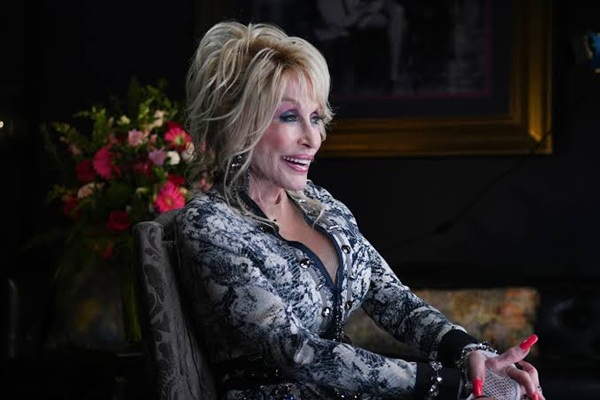
That emotional honesty is one of the reasons the song remains so memorable.
Listeners can hear the insecurity beneath the confidence, the desperation beneath the politeness, and the heartbreak hiding behind the narrator’s carefully chosen words.
It is a remarkably human story, even for people who have never experienced the exact situation described in the song.
Why “Jolene” Sounds So Different From a Typical Love Song
Many country songs tell stories about betrayal after a relationship has already fallen apart.
“Jolene” captures a different moment: the frightening possibility that a relationship could be lost.
The narrator is not describing a breakup that has already happened. She is trying to prevent one.
That distinction gives the song its unusual emotional power.
Instead of presenting herself as the stronger or more desirable woman, the narrator admits that Jolene possesses qualities she fears she cannot compete with. Her plea is personal, vulnerable, and painfully sincere.
Parton’s expressive vocal delivery makes the story feel immediate. The repeated use of Jolene’s name creates a memorable musical hook while reinforcing the narrator’s desperation.
The arrangement is relatively restrained, allowing the melody and storytelling to take center stage.
It is a reminder that a song does not need elaborate production or complicated lyrics to leave a lasting impression. Sometimes, a clear story and an unforgettable melody are enough.
From a 1973 Single to a Country Music Classic
“Jolene” was released as a single on October 15, 1973, and later appeared on Parton’s album of the same name, released in February 1974.
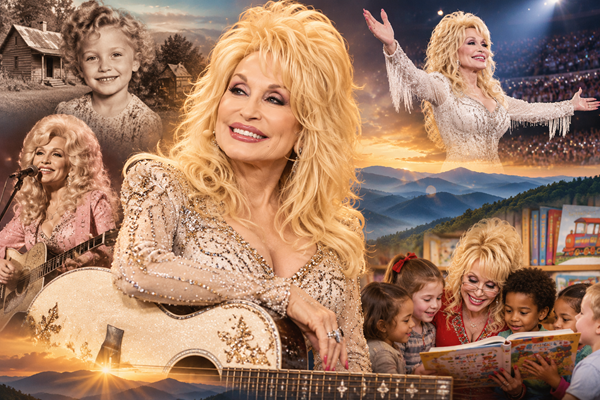
The single climbed to the top of the American country charts and became one of Parton’s signature recordings. Its success helped establish her as a major solo artist, with a songwriting style that could turn personal observations into stories understood by millions.
The album Jolene also featured another remarkable Parton composition: “I Will Always Love You.”
The two songs reveal different sides of her songwriting ability. One explores the fear of losing someone to another woman, while the other expresses the pain and affection involved in saying goodbye.
Together, they demonstrate how effectively Parton could communicate complicated emotions through simple, memorable storytelling.
A Song That Continues to Reach New Generations
More than fifty years after its original release, “Jolene” remains recognizable to listeners across generations.
Its enduring popularity comes partly from its universal theme. Love can make people feel confident, but it can also expose their deepest insecurities. The fear of losing someone important is an emotion that transcends age, background, and musical preference.
The song has also been reinterpreted by numerous artists, allowing new audiences to discover its story. One especially notable example is Beyoncé’s version, released in 2024 as part of her album Cowboy Carter, which brought the classic into another contemporary musical conversation.
Every new interpretation highlights a different aspect of the song, but the central story remains powerful: a woman confronting her fears and asking another woman to show compassion.
That is the strength of great songwriting. The details may belong to a particular time and place, but the emotions remain familiar.
The Lasting Legacy of “Jolene”
Dolly Parton’s “Jolene” is more than a memorable country song. It is an example of how a songwriter can combine an everyday encounter, a personal observation, and an imaginative story to create something extraordinary.
A young girl’s beautiful name provided the spark. A personal experience supplied the emotional inspiration. Parton’s gift for melody and storytelling brought the two together.
The result was a song that continues to be discussed, performed, covered, and rediscovered decades after its debut.
Perhaps the most remarkable thing about “Jolene” is that its narrator never truly knows what will happen next. She can only express her fears and make her plea.
That uncertainty is precisely what makes the song so compelling.
And it leaves listeners with a question that has helped keep the story alive for generations: If someone you loved seemed drawn to another person, would you fight for that love, or would you find the strength to let go?
More than fifty years later, “Jolene” still invites us to consider the answer.
What do you think makes “Jolene” so unforgettable? Is it Dolly Parton’s voice, the real-life inspiration behind the story, or the emotions that almost anyone can understand?
Share your thoughts in the comments, and tell us whether “Jolene” is one of your all-time favorite country songs.