A Paternity Test Error Cost Me Three Years With My Family
When our son was born, a doubt took hold of me. I couldn’t explain where it came from. Maybe it was insecurity, maybe fear, but I became determined to get a paternity test.
My wife looked at me calmly when I told her. Then she asked, “And what if he isn’t yours?”
My answer was cold and immediate.
“Then I’ll divorce you. I’m not going to raise another man’s child.”
A few weeks later, the results arrived. They said I wasn’t the father.
I felt as if my entire world had collapsed. Instead of asking questions or seeking a second opinion, I treated that piece of paper as undeniable proof. I packed my belongings, filed for divorce, and cut off contact with my wife and the little boy I had once held in my arms.
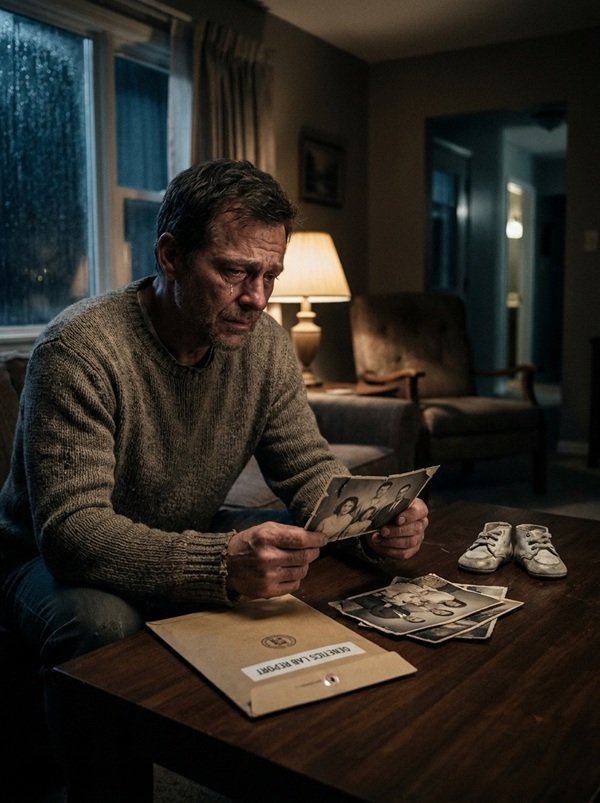
Just like that, I walked away from my family.
For the next three years, anger followed me everywhere. I blamed my ex-wife. I replayed the result in my mind and convinced myself that leaving had been the only choice. I never imagined that the answer I trusted so completely could be wrong.
Then, one afternoon, I ran into an old friend of my former wife.
What she told me changed everything.
She explained that my ex-wife had been devastated by my departure. She hadn’t simply accepted the result and moved on. She had returned to the clinic, demanding answers and asking them to investigate what had happened.
That was when the truth came out.
The laboratory had made a mistake. The samples had been mislabeled.
The boy I had abandoned was my son all along.
I couldn’t find words to describe what I felt. Relief came first, followed by disbelief, shame, and a crushing sense of regret. The test I had treated as the final word had been wrong, and I had made a life-changing decision without giving anyone the chance to explain.
But learning the truth didn’t turn back time.
My former wife had moved away, and my little boy had grown up without me. He was now old enough that he barely remembered the father who had once been part of his world.
I tried to reach out, hoping I could somehow begin to repair what I had broken. But my ex-wife didn’t respond.
I couldn’t blame her for keeping her distance. I had walked away without waiting for answers, leaving her to deal with the pain and raising our child without me. A laboratory error had started the chain of events, but it hadn’t forced me to react with such certainty or to refuse any further conversation.
Now, some nights, I sit alone looking through old photographs.
I see his tiny hand wrapped around my finger. I remember his first smile and the sound of his laughter. I think about the birthdays, the milestones, and the ordinary afternoons I can never get back.
Three years may not sound like a lifetime, but in a child’s life, three years hold an entire world of memories.
I used to believe that the test had betrayed me. Now I understand that I allowed one result to become a verdict on my whole family. I was so focused on protecting myself from the possibility of being deceived that I never stopped to consider the possibility that the information was wrong.
I wanted certainty, and when I thought I had found it, I stopped listening.
The hardest part is knowing that the truth eventually came out, but not before my choices had caused lasting harm. An apology might be necessary. Patience might give us a chance to speak again someday. But neither can demand that my former wife forgive me or that my son suddenly feel close to a father he barely remembers.
If I ever get the chance to rebuild that relationship, I know I will have to begin by accepting responsibility—not by expecting them to forget what happened.
Because the test result was wrong, but the decisions I made afterward were mine.
Sometimes, the greatest mistake isn’t believing something false. It’s refusing to question it before making a choice that changes other people’s lives forever.


