A Mother’s Heartfelt Words During Her Daughter’s Darkest Chapter
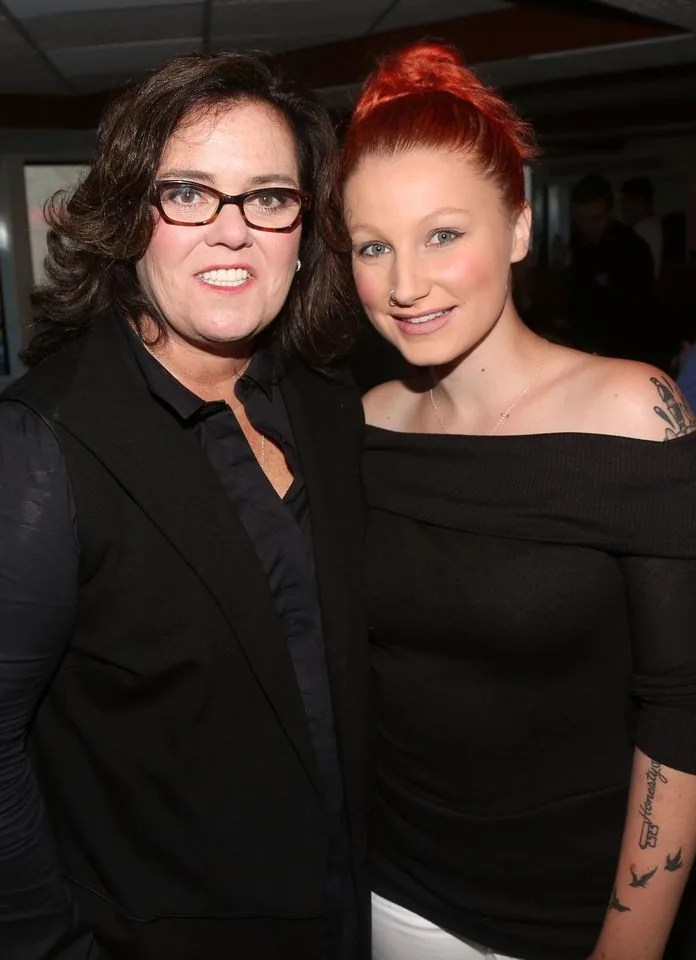
Rosie O’Donnell has shared one of the most personal pieces of writing of her life—a heartfelt poem revealing the pain, fear, and unwavering love she feels for her daughter, Chelsea.
Instead of issuing a public statement, the television personality and actress chose to speak directly from the heart through her personal newsletter, giving readers an intimate glimpse into what it means to stand beside a child during one of life’s greatest challenges.
Her words are not about defending mistakes or asking for sympathy. They are about a mother’s determination to keep loving, hoping, and believing in better days, even when the road ahead feels uncertain.

When Silence Becomes Every Parent’s Greatest Fear
One of the most emotional moments in Rosie’s poem centers on a period when she heard nothing from Chelsea after she was transferred from a local jail to a state prison.
For more than a week, there were no phone calls, no updates, and no reassurance.
“It wasn’t normal for us,” Rosie wrote.
For any parent, unexpected silence can quickly become overwhelming. Prison transfers often interrupt communication for days or even weeks, leaving families with little information and no control over the situation.
That uncertainty became one of the heaviest burdens she had to carry.
A Difficult Reality
Chelsea, now 28, has remained in state custody since October after her probation was revoked following several legal issues involving drug possession and child neglect.
Rosie doesn’t attempt to erase or excuse the painful reality of those events.
Instead, she embraces a difficult truth many parents understand: a child can make serious mistakes without losing a parent’s love.
Her poem acknowledges the consequences while refusing to let them define Chelsea’s entire identity.
Finding Hope Inside Hard Circumstances
Rosie describes the harsh routine of prison life, explaining that Chelsea spends nearly 23 hours each day inside her cell, with only a brief period outside.
For many readers, those details offer a sobering reminder of how structured and restrictive incarceration can be.
Simple moments—fresh air, sunlight, or a short phone conversation—become meaningful victories.
Those ordinary privileges suddenly carry extraordinary value.
A Relationship Beginning to Heal
Rosie and Chelsea have experienced years of public ups and downs, including periods of estrangement.
Yet the current situation has unexpectedly brought them closer.
Rosie calls this renewed bond the “silver lining” in an otherwise heartbreaking chapter.
Sometimes life’s greatest struggles have a way of revealing what matters most.
Despite everything that has happened, mother and daughter are rebuilding trust one conversation at a time.
The Lifeline of Daily Phone Calls
Their regular phone calls have become the highlight of Rosie’s days.
Each conversation reminds them that neither of them is facing this journey alone.
Rather than focusing on what has been lost, Rosie expresses gratitude for what remains:
The chance to hear her daughter’s voice.
The reassurance that she is safe.
The hope that tomorrow might be a little brighter than today.
In difficult seasons, gratitude often becomes its own kind of strength.
Dreaming About Tomorrow
Throughout the poem, Rosie imagines the future she hopes Chelsea will one day have.
She pictures a life built around sobriety, healing, and being fully present for her four children.
It is a vision filled with ordinary joys that many families take for granted—laughing together, sharing meals, and creating new memories free from court dates and legal struggles.
Hope, Rosie suggests, isn’t about pretending everything is fine.
It’s about believing tomorrow can be better than today.

A Visit She Will Never Forget
Rosie also recounts visiting Chelsea inside the correctional facility.
Like many prisons, strict rules governed every moment of the visit.
Only one hug was allowed at the beginning and another at the end.
Hands had to remain visible.
Voices stayed low.
Nothing could be exchanged.
Within those limitations, every second together became precious.
What comforted Rosie most wasn’t anything dramatic.
It was seeing that Chelsea appeared healthy.
Her skin looked clear.
She seemed calm.
Her eyes looked rested.
To an outside observer, those might seem like small details.
To a worried mother, they meant everything.
The Pain of Separation
Chelsea is also the mother of four young children.
Their inability to visit weighs heavily on everyone involved.
Rosie understands the emotional cost that separation places on families, especially when young children are involved.
Even their visit ended sooner than expected after a tornado warning forced everyone to leave.
Driving home alone through the storm, Rosie reflected on what she described simply as “a big day.”
Not because everything had gone perfectly.
But because every moment together mattered.
Lessons About Love
Toward the end of the poem, Rosie reflects on what decades of motherhood have taught her.
She believes unconditional love is not something we simply feel.
It is something we choose every day.
Forgiveness takes time.
Healing is rarely quick.
Growth never truly ends.
As she beautifully writes:
“We live, we learn, and we grow—even at 64.”
Those simple words capture the heart of her message.
The Quiet Strength of Showing Up
Rosie’s story speaks not only to families affected by incarceration but to anyone walking beside a loved one through addiction, illness, or personal hardship.
Waiting for a phone call.
Counting the days until a visit.
Searching for small signs that things are getting better.
These quiet acts rarely make headlines, yet they require remarkable courage.
Sometimes love is simply answering every call.
Showing up every visiting day.
Keeping hope alive when hope feels difficult.
Seeing the Person Beyond the Mistakes
One of the poem’s most powerful messages is its reminder that people are more than the worst decisions they have ever made.
Rosie doesn’t ignore Chelsea’s past.
She simply refuses to let it become the whole story.
Instead, she notices the small signs of healing—a steadier voice, calmer eyes, healthier skin—and sees possibilities where others might only see failure.
It is a reminder that recovery is often built one day at a time.
Holding Onto Hope
By sharing such an intimate piece of writing, Rosie invites others to treat themselves and the people they love with greater compassion.
Her poem is not asking readers for pity.
It is asking for understanding.
It reminds us that even in life’s darkest seasons there can still be meaningful conversations, healing visits, and moments of quiet grace.
A single hug.
A reassuring phone call.
A hopeful dream about tomorrow.
Sometimes those are enough to keep moving forward.
A Mother’s Love Never Stops
At its heart, Rosie’s poem is about resilience.
It reminds us that becoming an adult doesn’t end a parent’s love.
Parents continue hoping, worrying, forgiving, and believing long after childhood has passed.
As Chelsea continues her journey toward recovery, Rosie remains exactly where loving parents have always been—answering every call, celebrating every step forward, and believing that healing is still possible.
Because, in the end, family isn’t defined by perfection.
It’s defined by showing up, even when the path is difficult, and choosing love again every single day.
Related Posts
-
 Football Team Told They Couldn’t Pray After Game Defy School, Get Entire Town To Kneel Down
-
 Only One Boy Asked Me to Prom Because Everyone Else Rejected Me Over the Birthmark on My Face The Entire School Laughed Until Police Walked Through the Doors
-
 The Note in the Lunchbox That Saved My Life
-
 The Three Little Pigs’ Very Thirsty Dinner