 By Admin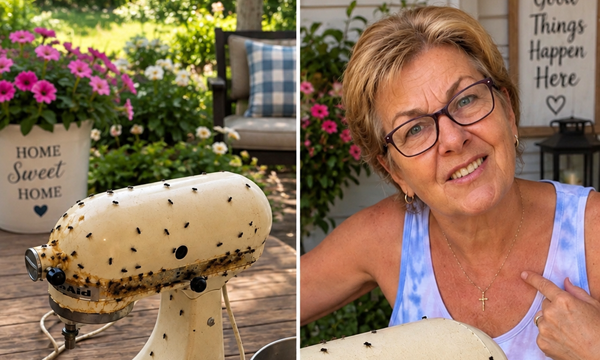
My Neighbor Kept Borrowing My Appliances – When She Returned My Mixer Broken and Filthy, I Taught Her a Lesson
My neighbor Carol has borrowed close to ten things from me this year.
It started with my ladder in the spring.
Then the pressure washer.
Then it moved into my kitchen.
The slow cooker.
The steamer.
A cooler.
My good roasting pan.
They always came back late. Or dirty. Or missing a lid.
Never a word about any of it.
The first few times, I told myself it wasn’t worth the awkwardness.
We’d lived next door to each other for six years.
Our kids used to play together.
We watered each other’s plants when someone traveled.
Carol wasn’t a bad neighbor, honestly.
Just careless in a very particular way.
Anything she borrowed seemed to stop belonging to anyone else the moment it crossed her doorway.
My ladder came back caked in dried mud.
The roasting pan had a dent in one corner.
The cooler smelled like fruit punch for a week straight.
When I brought any of it up, Carol always had an answer ready.
“Oh, I meant to wipe that down.”
Or, “Wasn’t that already scratched?”
Or my personal favorite, “You know how kids are.”
Apparently her children were responsible for every missing lid, stain, dent, and late return within a five-mile radius.
I should have stopped lending her things long before the mixer. I know that now.
The problem is I hate saying no.
Last Tuesday, Carol knocked on my door around four.
“Please tell me you own a stand mixer.”
“I do.”
“I knew it.” She clasped her hands together. “You’re saving my life.”
I already knew where this was headed.
“What happened?”
“I’m making a cake for Saturday. My hand mixer is useless.”
Then she pointed toward my kitchen. “The cream one?”
My stomach dropped.
It’s a KitchenAid. The heavy old kind. Cream-colored, a few scratches near the base, one small chip in the enamel where my father once dropped a metal measuring cup against it.
My mother bought it in 1989. She used it every Sunday until she couldn’t stand long enough to anymore.
When she passed, most of her kitchen things were split between my sister and me. I took the mixer. Not because it was worth the most. Because when I switched it on, it sounded like Sunday morning in my parents’ house.
I know that sounds ridiculous if you’ve never loved an object because of who used it.
“Carol, that one I’d rather not lend out. It was my mom’s.”
She laughed like I’d made a joke.
“I’ll be so careful. It’s one cake.”
“I really don’t—”
“Come on.”
My daughter, Mia, was watching from the porch steps.
And I heard myself say, “Fine.”
I regretted it before it even finished leaving my mouth.
Carol grinned. “I’ll bring it back Saturday.”
“Please clean it before you do.”
“Obviously.”
Saturday morning, I found it sitting on my porch. Not handed to me. Not even a knock. Just left on the boards where anyone walking by could have taken it.
I knew something was wrong before I picked it up.
Dried cream in the seam where the head meets the body. Yellow. Days old. Something sticky crusted onto the cord. The whisk attachment still sitting in the bowl, coated in hardened icing.
She hadn’t rinsed a single piece.
I carried it inside. Mia followed.
“She just left it there?”
“Apparently.”
“That’s disgusting.”
“Yes.”
It took me nearly twenty minutes to work the dried cream out of the seam. When I finally plugged it in, the motor made a sound I hadn’t heard from it in thirty-six years.
A grinding hum. Then a click. The head jerked once and stopped.
I switched it off. Waited. Tried again.
Same sound.
Mia looked at me. “Is it broken?”
“I don’t know.”
“Grandma’s mixer?”
That did it.
I walked across the grass and knocked on Carol’s door. I wasn’t even angry yet — I genuinely thought she’d be embarrassed, that this was why she’d left it and gone.
She opened the door holding a coffee mug.
“Oh. Yeah.”
No apology. Nothing.
“The mixer isn’t working.”
Carol rolled her eyes. “Honestly, you should just buy a new one. That thing is ancient.”
“What happened?”
“It quit halfway through my frosting.”
“What do you mean it quit?”
“It made some awful noise and stopped turning.”
“Did you turn it off when it started making the noise?”
She sipped her coffee. “I had eleven people in my dining room with no cake.”
She shrugged. “So thanks for that, I guess.”
I stared at her. She was blaming me. For the mixer she borrowed. Then broke. Then returned filthy.
“Carol, that mixer worked perfectly when you took it.”
“It’s thirty-something years old.”
“Thirty-six.”
“Exactly.” She smiled like she’d proven her point.
“Did you keep running it after it started struggling?”
Her face shifted. Just slightly. Enough.
“I was trying to finish what I was making.”
“That’s a yes.”
That’s when I understood — she wasn’t embarrassed. She wasn’t sorry. She didn’t think she’d done anything wrong at all.
The next morning I made a plan. But first, I needed to know if I was overreacting.
I took the mixer to a repair shop. The man behind the counter, Walt, looked like he’d been fixing appliances since mine was new. He opened the housing, checked the motor.
“What were you mixing?”
“I wasn’t. My neighbor borrowed it.”
“Ah.” One syllable, an entire opinion packed inside.
“The motor overheated,” he said. “Looks like it was under heavy load and kept running after it started straining.”
“So it didn’t just die from age?”
Walt laughed. “These old machines are tanks. Age didn’t help, but this wasn’t normal wear. Once it started complaining, whoever was using it should’ve stopped.”
The repair estimate: $347.
I texted Carol a photo. “Repair shop confirmed the motor was damaged from overload and continued use after it started straining. It’s $347. Please send the money.”
Twenty minutes later: “LOL absolutely not. I’m not paying $347 for a mixer from the 80s.”
Then: “You should be thanking me for finally giving you a reason to replace it.”
Mia read the message over my shoulder. “Mom?”
“Yes?”
“Can I say a bad word?”
“No.”
“Can I think one?”
“Absolutely.”
I paid for the repair myself that evening. Then I printed something.
Carol’s niece was graduating the following weekend — there’d been a sign in her yard for two weeks. She was hosting the party. Forty people, maybe more.
Three days before it, she knocked.
“Hey, neighbor. I need to borrow a few things.”
“What things?”
“The big cooler. Your slow cooker. And do you still have those folding tables?”
“Yes.”
“Perfect.” She started turning toward my garage.
“Hang on.”
I went inside and came back with a clipboard.
Her expression changed. “What is that?”
“A lending agreement.”
She laughed. I didn’t.
Listed on the page: the cooler, the slow cooker, the two tables, each with a replacement value. Below that, three conditions — return by Sunday at six, clean and dry, same condition as lent. Then: a refundable $350 security deposit. And beneath that, an outstanding balance — mixer repair, $347.
“You cannot be serious.”
“Completely.”
“You want $700 to borrow a cooler and some tables?”
“No. $350 is refundable. $347 is what you already owe me.”
“This is insane.”
“You taught me I was being too casual about lending things.”
“I always bring your stuff back.”
“Eventually.”
“Nothing has ever happened.”
“The mixer happened.”
She tossed the clipboard onto the table. “This is unbelievably petty.”
“Then don’t borrow anything.”
She marched back across the lawn.
Mia had been listening from inside. “That was terrifying.”
“Good terrifying?”
“Mostly.”
Saturday morning, 8:15, someone knocked. It was Carol — half her hair curled, one eye done with makeup, the other not. She looked like she hadn’t slept.
“Do you still have the tables?”
“Yes.”
“The rental company brought four chairs and no tables.”
“That seems inconvenient.”
“Can I borrow yours?”
I went and got the clipboard.
Her face fell. “You’re still doing this?”
“Yes.”
“People arrive in two hours.”
“Then you should decide quickly.”
She sighed. “Fine.”
“Deposit first.”
She stared at me, then disappeared inside. Five minutes later she came back with a checkbook.
“Who even writes checks anymore?”
“You, apparently.”
She wrote one for $697. “You’re keeping $347 of this no matter what.”
“I know.”
She borrowed the cooler, the slow cooker, the two tables — and after a pause, my drink dispenser too. I added it to the sheet. She groaned. She signed.
The party happened. Music, balloons, cars everywhere. I stayed out of it.
Sunday, 4:20 p.m., Carol knocked. The tables were folded. The cooler washed and dried. The slow cooker spotless. The drink dispenser cleaner than when she’d taken it.
“Satisfied?”
“Very.”
I went inside and brought back her deposit check.
She frowned. “Where’s the rest?”
“What rest?”
“The mixer money.”
“That isn’t a deposit. The repair shop already has it.”
Her expression did something complicated — anger, embarrassment, maybe a flicker of respect.
“This whole thing is ridiculous,” she said. “I really thought your mixer broke because it was old.”
“That isn’t actually what bothered me most.”
“What do you mean?”
“You thought it broke because it was old. And you still left it dirty on my porch.”
She looked away. For once, she had nothing to say.
“If you’d knocked and said, ‘I’m sorry, it stopped working, I don’t know what happened’ — we’d be having a very different conversation.”
“I had people over. I was stressed.”
“I know.”
A long pause. “I shouldn’t have left it like that. And I shouldn’t have blamed you.” She looked at the grass. “I’m sorry.”
Not dramatic. Not perfect. But real.
“Thank you.”
Two days later, Walt called. The mixer was ready. He plugged it in for me before I left the shop.
Smooth. Steady. Exactly the sound I remembered.
“You’ve got plenty of life left in this thing,” he said, patting the top. “Take care of it, and it’ll outlive both of us.”
That weekend, Mia and I made my mother’s Sunday cake. Chocolate. Nothing fancy. She measured the flour. I ran the mixer.
“Sounds normal,” Mia said.
“It does.”
For a second I could see my mother standing in her old kitchen. Same sound. Same cream-colored machine. Same ridiculous attachment to an object most people would’ve thrown out years ago.
Carol never asked to borrow it again. In fact, she stopped borrowing almost anything for months.
Then one afternoon in October, she knocked.
“Do you still have the pressure washer?”
“Yes.”
She sighed. “Do you still have the forms?”
“Absolutely.”
She rolled her eyes. But she signed one.
And when the pressure washer came back, it was clean, on time, with a full tank.
People say lending to neighbors is part of being neighborly. I still believe that.
But being generous doesn’t mean pretending someone else’s carelessness costs you nothing.
For years I thought saying no would make me the difficult one. What it actually did was teach Carol that my things had value, even when they weren’t valuable to her.
The deposit worked because suddenly she had something of her own on the line.
That’s what really changed — not her ability to rinse a slow cooker. Her reason to care.
As for the mixer, it’s still sitting on my counter. Same chip in the enamel. Same scratches. Same motor my mother listened to every Sunday for years.
Carol was right about one thing.
It is ancient.
That’s exactly why I wanted it back.