 By Admin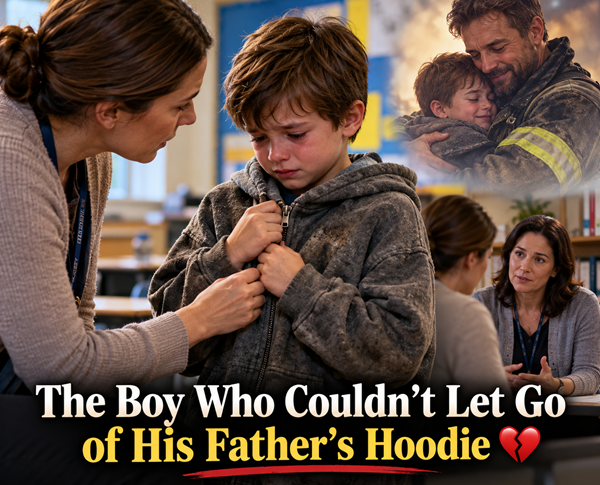
A teacher grew concerned when a young boy came to school wearing the same dirty hoodie every day for an entire month. Finally, she told him he had to take it off. But as soon as she reached for the zipper, he clutched it tightly, his eyes filling with tears. Thinking he was simply being stubborn, she had no idea that the hoodie held a heartbreaking meaning he wasn’t ready to let go of.
Later, the PE teacher explained the truth: the boy’s father had died in a fire. That old hoodie was one of the few things he had left that still carried his father’s scent. To him, it wasn’t just a piece of clothing. It was a connection to the person he missed most, a small comfort that made him feel close to his dad even after losing him.
Overwhelmed with guilt, the teacher realized how badly she had misunderstood the boy. She went to the school counselor, hoping to apologize and find a way to help him through his grief.
But what the counselor revealed left her speechless.
The counselor had already been helping the boy in quiet, thoughtful ways. She had arranged free school lunches, given him weekly office-helper duties so they could talk privately, and even visited his grandmother on weekends to help her with paperwork. She had done everything she could to ease their struggles without making the boy feel different from his classmates.
When the teacher asked why she had kept all of this a secret, the counselor gently explained that the boy deserved to be more than “the child whose father died.”
He deserved to laugh, learn, make friends, and enjoy ordinary days without his loss defining every moment of his life.
That conversation changed the teacher’s perspective forever. She began to understand that what looks like defiance may actually be pain, and what appears to be a bad habit may be someone’s way of coping with an unbearable loss.
Sometimes, children don’t need us to fix their pain. They need us to understand it.
Because the greatest acts of kindness aren’t always loud or visible. Sometimes, they happen quietly, behind the scenes, through small gestures that protect a child’s dignity while reminding them that they are not alone.
And sometimes, the most compassionate thing we can do is give a grieving child the space to heal in their own time, without forcing them to explain their tears or let go of the one thing that still makes them feel close to someone they love.